
Inches to Centimeters: inch specifications expressed in metric length
Inches to Centimeters translates an inch-based specification into metric length by multiplying by 2.54. It is useful for product listings, craft plans and dimensions written as fractions. This Inches to Centimeters guide explains decimal preparation, compound measurements and labeling, then follows a small rectangular item so each converted value remains connected to the correct side.
Inches to Centimeters: inch specifications expressed in metric length
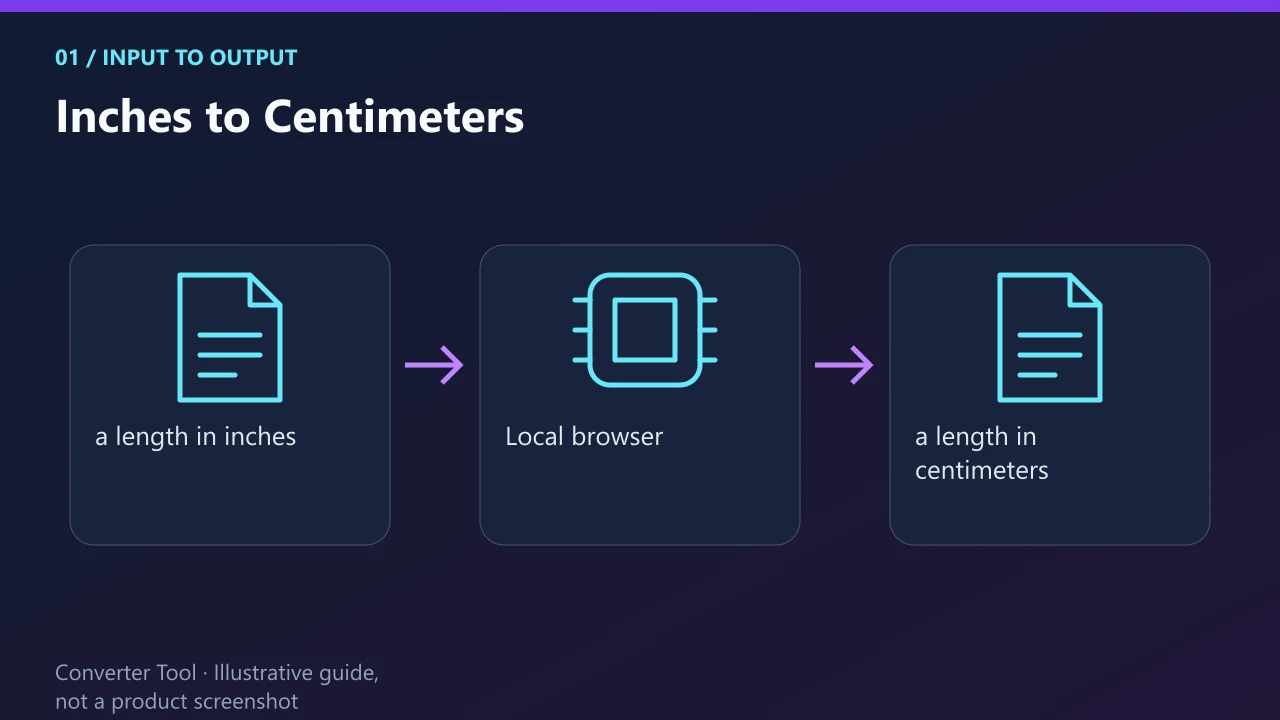
This page converts inches into centimeters for metric product descriptions, craft plans and everyday measurement comparisons. The physical length remains the same. Verify that the source specifies inches rather than feet before entering the numeric value. One inch is defined as exactly 2.54 centimeters. Multiply the inch measurement by 2.54 to obtain centimeters. Dividing by the factor answers the reverse conversion and is a common reason for an otherwise tidy but incorrect result.
Use Inches to Centimeters when the source truly describes length in inches. Inch notation can appear as a word, an abbreviation or a quotation-like symbol, while a similar single mark may indicate feet. Read the surrounding specification instead of relying on an isolated number. Inches to Centimeters multiplies by an exact factor, but the page cannot determine whether the supplier's dimension refers to width, height, diagonal or nominal size. Preserve those labels as you work. If a product will be listed for a metric audience, record the original inches alongside the converted value so a later correction can be traced to the source rather than guessed from a rounded result.
Inches to Centimeters: turning a mixed fraction into decimal input
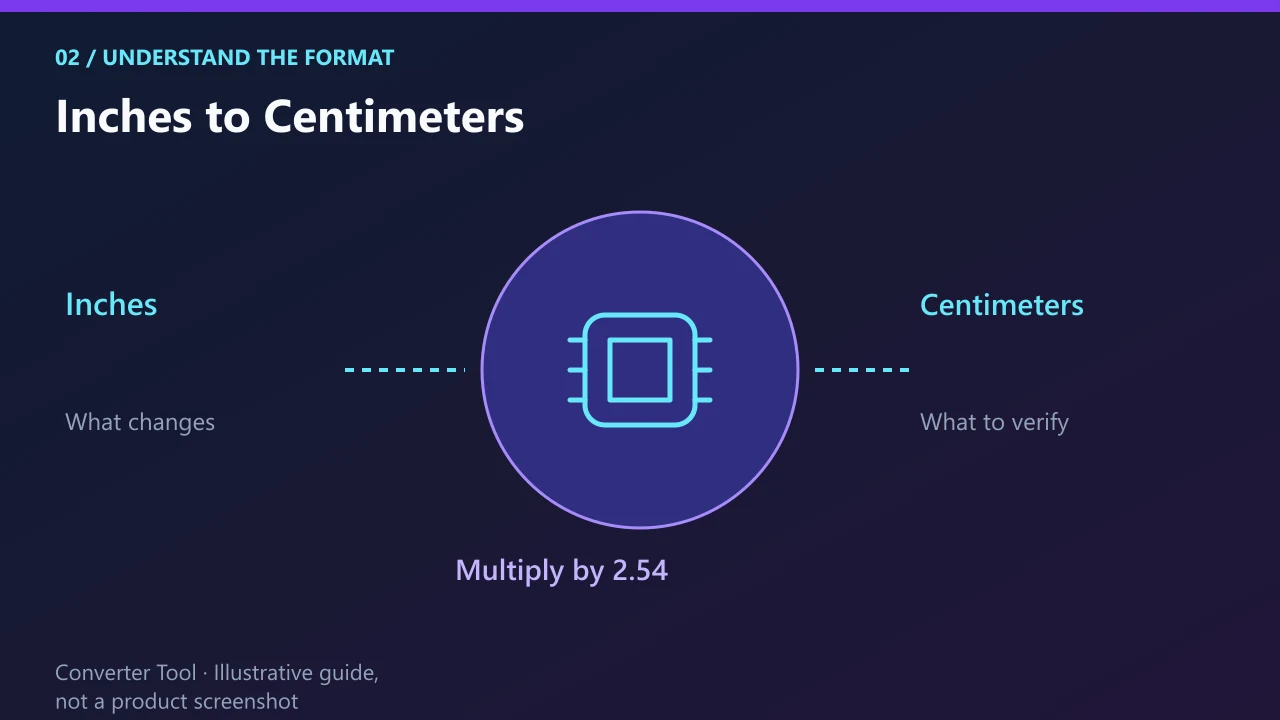
Use decimal notation for the value you intend to convert. If the source is a fraction, first interpret it correctly; one and one half inches is 1.5 inches. Do not enter a mixed fraction as two unrelated numbers. Result precision should reflect the measurement task. An exact conversion factor does not remove uncertainty from a rough source measurement. Keep adequate digits for calculation, then apply a practical rounding convention to the final specification.
Prepare fractional measurements before entering Inches to Centimeters. One and one half inches is 1.5 inches because the fractional part is one divided by two. Three quarters of an inch is 0.75, not 3.4 or a pair of separate numbers. For Inches to Centimeters, converting the fraction correctly is part of the input task; the calculator should not be expected to infer arbitrary mixed notation from a numeric field. Keep the original fraction in your notes when it comes from a plan. That preserves the intended measurement and makes it easier to explain how a decimal was obtained if the metric result is later questioned.
Inches to Centimeters: a rectangular item with labeled sides

A length of 12 inches becomes 30.48 centimeters. A length of 1.5 inches becomes 3.81 centimeters. These examples cover both a familiar whole-unit measurement and a decimal value often encountered when translating fractions from plans. Convert width, height and depth separately when preparing a product listing. Keep each value paired with its label so that a correct number is not assigned to the wrong side. This tool converts length, not square inches or cubic inches.
For an Inches to Centimeters listing example, take a rectangular item with a 12-inch length and a 1.5-inch width. The converted values are 30.48 centimeters and 3.81 centimeters respectively. Keep the two labels attached and do not swap them simply to follow a different listing convention. This Inches to Centimeters example also shows why rounding the source first is unhelpful: turning the width into either one or two inches would change the physical specification substantially. If a listing requires fewer decimal places, round the final metric value deliberately and retain the more precise conversion internally. The output describes the same length, not a redesigned metric-sized version of the item.
Inches to Centimeters: feet-and-inches are not a single inch number
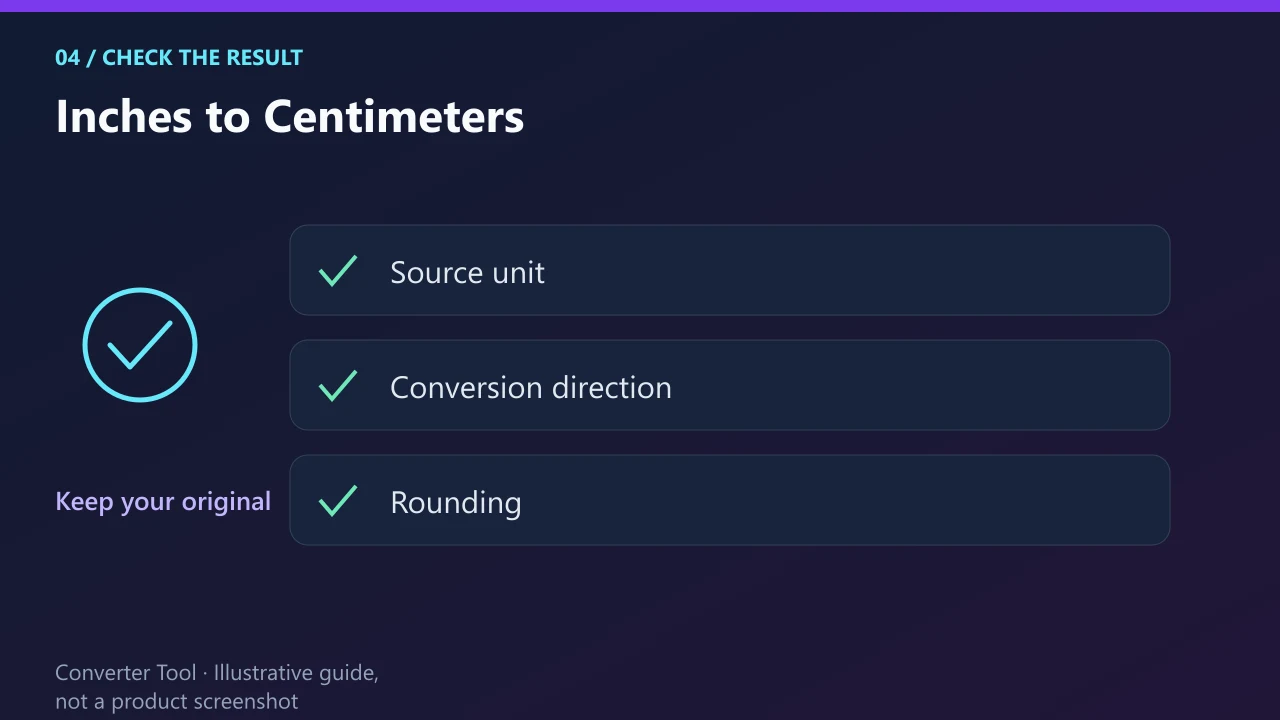
If the result is unexpectedly large, verify whether a feet-and-inches measurement was entered as though it were only inches. Convert the compound measurement to a single inch value first. The calculator cannot infer an unstated unit convention from a number alone. Check an important result using the reverse conversion and allow for displayed rounding. Keep original measurements in the project notes. A centimeter value does not by itself establish fit, tolerance or suitability for a physical part.
An unexpectedly large or small Inches to Centimeters result may come from compound feet-and-inches notation. A length of two feet three inches is a total of twenty-seven inches, not 2.3 inches. Convert the feet portion using twelve inches per foot and add the remaining inches before using this page. Inches to Centimeters cannot infer an unstated compound convention from a decimal number. Conversely, a source measured directly in inches should not be multiplied by twelve again. Check the original label and write down the intermediate total when the measurement combines units. This step prevents a systematic interpretation error that no amount of careful decimal rounding can correct afterward.
Inches to Centimeters questions
How does Inches to Centimeters handle a fractional inch?
Convert the fraction to decimal inches before using Inches to Centimeters. For example, one and one half inches becomes 1.5, then multiplication by 2.54 gives 3.81 centimeters. Preserve the original fraction when it comes from a plan or specification.
What is the exact Inches to Centimeters relationship?
Inches to Centimeters uses one inch equal to exactly 2.54 centimeters. Multiply the inch value by that factor. The exact unit definition does not eliminate uncertainty in the original physical measurement or determine how the final result should be rounded.
Can Inches to Centimeters accept a feet-and-inches measurement directly?
For Inches to Centimeters, first express a compound measurement as total inches. Multiply whole feet by twelve and add the inch portion. Do not enter two feet three inches as 2.3 inches; that represents a very different length.
Does Inches to Centimeters calculate an area?
Inches to Centimeters converts one length at a time. Convert labeled sides separately when describing a rectangle, and use an area relationship when the source is square inches. Applying the ordinary length factor to an area produces the wrong unit.